
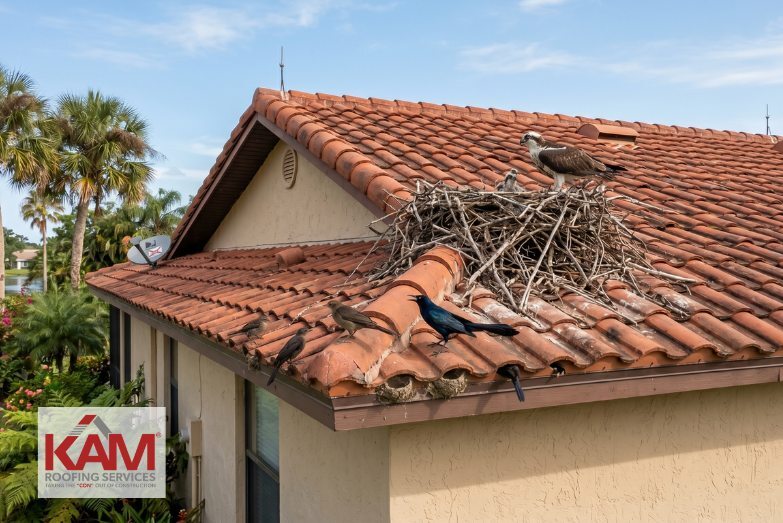
If you need a new roof in Pinellas County, Florida, rooftop nesting birds can stop your project. State and federal law protect seabirds like the Least Tern during their breeding season. This season runs from April 1 to September 30. If a protected bird colony is on your roof, all work must stop until the birds leave. This delay protects wildlife and keeps property owners safe from huge fines.
Why Roof Delays Matter to Pinellas County Homeowners
Roofing work is rarely a good time for a Pinellas County building owner. When your roofing project stops because of nesting birds, it can cause big problems.
First, Florida’s weather does not wait. Heavy summer rains and high humidity make a bad roof problem much worse, much faster. Salt air near the coast also speeds up corrosion on metal and tile roofs. A delay that lasts for months can push your needed repairs right into the middle of hurricane season.
KAM Roofing Services is a local expert. We handle shingle, tile, metal, and flat roofing projects, and understand the rules for protected species. We follow all laws to make sure your project is done right. Our team values transparency and keeping you informed every step of the way.
We are devoted to Taking the ‘Con’ out of Construction.
What to Do About Rooftop Nests
Protected seabirds, such as the Least Tern and Black Skimmer, often choose gravel or flat commercial rooftops to lay their eggs. These areas are often safe from land predators. If you suspect birds are nesting on your roof, you must stop all activity immediately. You cannot remove the nests or disturb the birds without authorization.
Know Before You Go Checklist
You can avoid an accidental “take” by knowing what to look for before you go on the roof.
- Listen for Noise: These nesting species are very loud when they are present.
- Watch for Dive-bombing: Birds will fly up and attack what they see as a threat.
- Look for Signage: Building owners will often put up “Please Keep Off Roof” signs at access points to warn people.
Understand the Law on “Take”
The word “Take” is a legal term under Florida law. It means more than just killing a bird. “Take” includes annoying a bird or disturbing it so much that it disrupts its natural behavior. Even routine maintenance recommendations do not allow you to “take” a species. You need official authorization from the Florida Fish and Wildlife Conservation Commission (FWC).
Seasonal Timeline for Pinellas County Roofing
Knowing the seasons helps you plan work without delays.
| Season | Dates | Recommended Action |
| Non-Breeding | Oct 1 – March 31 | Conduct routine maintenance and non-emergency repairs. |
| Breeding | April 1 – Sept 30 | Avoid the roof. Only do emergency repairs with FWC or Audubon guidance. |
FAQs
When is bird nesting season in Florida?
Bird nesting season runs from April 1 through September 30. This is when you see colonies forming on flat rooftops.
Which birds nest on Pinellas County roofs?
The most common protected species that use gravel rooftops in Pinellas County are the Least Tern and the Black Skimmer.
Can I remove a bird nest from my roof?
You cannot remove an active nest. You must wait until the birds leave after the breeding season ends on September 30. If the birds are still present, you must get an Incidental Take Permit from the FWC before removing them.
What happens if bird droppings are on my roof?
Bird droppings are acidic and can break down roofing materials faster. In the Florida heat and humidity, this decay is sped up, especially around drains and gutters.
What is an Incidental Take Permit?
This is permission given by the FWC to property owners to perform work that might affect a protected species or its habitat.
Request An Estimate Today
Bird delays can quickly become expensive problems. If you need repair or replacement work, talk to the local experts at KAM Roofing Services. We will help you plan your project around the seasons and legal requirements to avoid costly stops. Get an honest, clear plan from us. We are Taking the ‘Con’ out of Construction.