
Key Takeaways:
- Standing seam and exposed fastener metal roofing are two popular metal roofing systems, each with distinct advantages and drawbacks.
- Standing seam metal roofing features concealed fasteners, offering superior weather resistance, durability, a sleek, modern appearance, and a weatherproof structure.
- Exposed fastener metal roofing uses visible screws, making it more affordable and easier to install, but it may require more maintenance over time.
- Standing seam roofs typically last longer, offer greater durability, and provide better protection against leaks compared to exposed fastener systems.
- The choice between standing seam and exposed fastener metal roofing depends on budget, desired aesthetics, maintenance preferences, and long-term performance needs.
- Both options offer energy efficiency, fire resistance, and a range of color and style choices to enhance curb appeal.
Choosing between these two metal roofing systems often comes down to one question: do you want the lower initial price of exposed fasteners, or the cleaner look and lower routine maintenance that usually come with standing seam?
Both systems can perform well when they are designed correctly, installed to manufacturer requirements, and matched to the right building. Yet they are not interchangeable. Fastener placement, panel movement, roof pitch, repair methods, and long-term service needs are all different. For homeowners and property managers in areas with heavy sun, humidity, salt exposure, and wind-driven rain, those differences deserve a close look.
Fastener Placement in Standing Seam and Exposed Fastener Metal Roofing
The most visible difference is also the most important one.
Standing seam metal roofing uses concealed clips and fasteners. The panels lock together at raised seams, and the attachment hardware sits beneath those seams rather than through the face of the panel. This creates a cleaner finished appearance and reduces the number of direct penetrations exposed to weather.
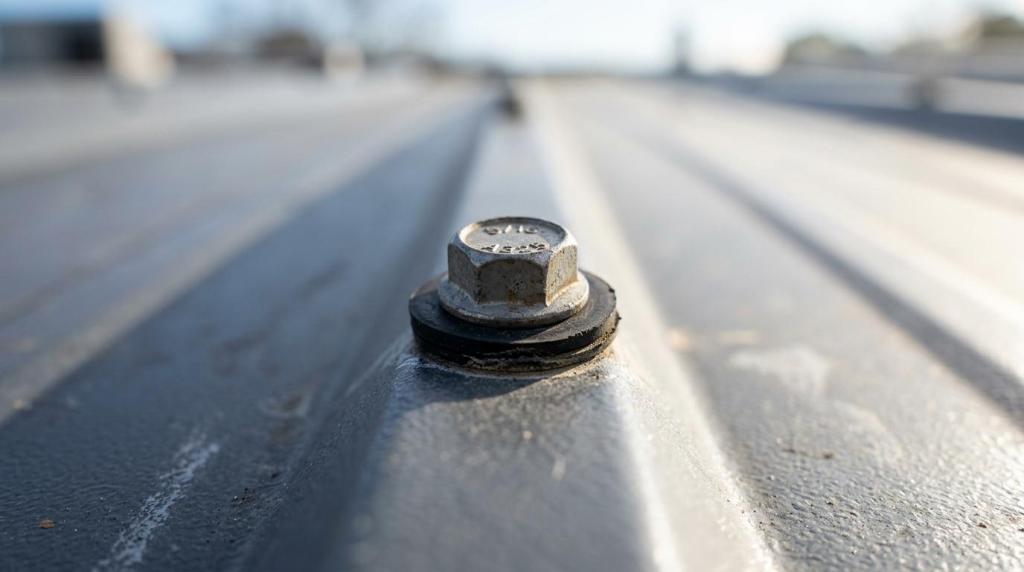
Exposed fastener metal roofing does exactly what the name suggests. Screws are driven through the panel face and into the roof deck or framing below. Each screw typically includes a washer seal intended to keep water out at the penetration point. When installed correctly, that system can be dependable. Still, every exposed screw is a potential maintenance item over time.
That design difference affects more than appearance. It also changes how each roof handles movement. Metal expands and contracts as temperatures rise and fall. Standing seam systems are commonly built with panel-specific clips that allow for thermal movement. Exposed fastener panels are more restrained because the screws pin the panel in place at many points across the surface.
In practical terms, concealed fastener roofing is often better at managing long panels and repeated movement cycles without stressing the fastener locations as quickly.
Metal Roofing Cost Differences and Installation Complexity
Price is often the first filter, and exposed fastener roofing usually wins that part of the comparison.
The panels are generally less expensive, labor is typically simpler, and installation is usually faster. For budget-sensitive projects, agricultural buildings, utility structures, and some commercial applications, that lower entry cost can make exposed fastener roofing an attractive option.
Standing seam usually costs more up front. The panel profiles are more specialized, the clips and clip screws add material cost, and installation takes greater precision. The installer must lay out the system carefully, secure the clips properly, and form or lock the seams according to the product requirements. That added labor is part of the value, but it still shows up in the estimate.
A lower bid, though, is only one part of the picture.
- Lower initial cost
- Faster installation
- Simpler panel replacement in many cases
- Cleaner architectural look
- Fewer exposed penetrations
- Better fit for longer panel runs
For many property owners, the smarter comparison is not just roof price today. It is roof cost over time.
A system that starts lower but needs more frequent service may not remain the cheaper option over the full life of the roof.
Maintenance, Leak Risk, and Corrosion Exposure in Metal Roof Systems
Exposed fastener roofs usually require more routine maintenance attention.
That does not mean they are poor systems. It means the maintenance checklist is longer. The screws and washer seals sit in direct sun, rain, and temperature swings. Over time, washers can age, screws can back out slightly, and seal points can weaken, affecting the overall durability of the roof system. If fasteners were overdriven, underdriven, or installed at an angle, the risk rises faster.
Standing seam systems generally have fewer ongoing maintenance demands because the primary fasteners are concealed. With fewer exposed penetrations across the panel field, there are simply fewer weather-facing points to inspect and reseal on a regular basis, making the system more weatherproof. That benefit is one reason standing seam is often selected for premium residential work and for buildings where appearance and long-term weathertightness matter.
Corrosion risk follows a similar pattern. When screws penetrate the panel face, the roof has many small points that need to remain properly sealed and protected, necessitating regular maintenance. In coastal settings, those details matter even more. Exposed hardware can weather faster than concealed clip systems, especially if dissimilar metals or poor-quality fasteners are involved.
The tradeoff is repair difficulty. Exposed fastener roofs are often easier to access and patch because the panels and fasteners are straightforward. Standing seam repairs can be more involved, since the system is mechanically or snap-locked and designed as an integrated assembly.
After a few seasons, the service differences often look like this:
- Standing seam maintenance: fewer exposed weather points and less frequent fastener-related service
- Exposed fastener maintenance: periodic checks for loose screws, worn washer seals, and isolated leaks
- Standing seam repairs: more specialized and sometimes slower
- Exposed fastener repairs: often simpler and less labor-intensive
Appearance, Panel Lines, and Architectural Style
Aesthetics matter more than many people expect, especially on homes and visible commercial properties.
Standing seam has a refined, architectural appearance. The vertical seams create strong lines, the fasteners are hidden, and the surface looks intentional from every angle. On modern homes, coastal homes, custom builds, and higher-end renovations, that clean finish is a major selling point.
Exposed fastener roofing has a more utilitarian character. That is not a drawback in every setting. It can look sharp on barns, workshops, storage buildings, and some rustic or industrial-style projects. Many owners like the direct, practical look. The key is matching the profile to the building rather than expecting it to create the same visual effect as standing seam.
The difference is easy to spot from the street.
Color and finish options can be strong in both categories, but the panels’ style still shapes the overall impression. If curb appeal is high on the priority list, standing seam usually has the edge.
Roof Pitch, Thermal Movement, and Panel Length Limits
This is where technical design starts to separate the two systems more clearly.
Standing seam is often better suited for lower slope roof pitches, depending on the profile and the manufacturer’s requirements. Because the seams are raised and the fasteners are concealed, the system can provide strong weathertightness on roofs where water drains more slowly. It is also well suited for longer panel applications, since the clip-based attachment can accommodate thermal movement more effectively.
Exposed fastener systems usually have stricter pitch and run-length limits. Water has more opportunities to work against the system because the panel face includes many penetrations. That does not mean exposed fastener roofing cannot perform well. It means the roof must be used within the conditions it was designed for, with special attention to slope, panel lapping, fastening pattern, and seal details.
On a long roof plane, daily expansion and contraction can put repeated stress on exposed fastener locations. Over years, that movement may contribute to fastener loosening or seal wear. Standing seam was developed in part to address that issue more gracefully.
Here is a simple side-by-side view:
| Feature | Standing Seam Metal Roofing | Exposed Fastener Metal Roofing |
| Fastener placement | Concealed beneath seams with clips | Visible on panel face |
| Upfront cost | Higher | Lower |
| Installation complexity | Higher | Lower |
| Routine maintenance | Usually lower | Usually higher |
| Repair simplicity | More specialized | Often easier |
| Appearance | Clean, architectural | Practical, utilitarian |
| Low-slope suitability | Often better, profile dependent | More limited |
| Long panel runs | Often better for thermal movement | More limited by movement stress |
These limits are one reason product selection should never be based on photos alone; ensuring the materials are weatherproof is crucial. The roof’s pitch, shape, panels, panel length, wind exposure, and local climate all need to be part of the decision.
Choosing the Right Metal Roof for Homes and Commercial Buildings
The best system depends on what matters most to the property owner.
If the goal is the lowest upfront cost with a familiar and efficient installation process, exposed fastener roofing may be the right fit. It can be a smart choice for detached structures, budget-driven replacements, and buildings where appearance is secondary to function.
If the goal is a longer-term investment with a cleaner profile and fewer routine fastener concerns, standing seam often makes more sense. Many owners choose it for primary residences, highly visible commercial buildings, and projects where long-term aesthetics carry real value.
A practical way to frame the decision is to rank priorities before reviewing bids.
- Choose standing seam if: appearance, lower routine maintenance, and longer panel capability are top priorities
- Choose exposed fastener if: initial budget, installation speed, and easier access for simpler repairs matter most
- Ask about roof pitch: not every metal profile is suitable for every slope
- Ask about climate exposure: salt air, heavy rain, and strong sun can affect service needs and material choice
Material selection matters too. Aluminum, steel, and copper each bring different strengths, price points, and environmental tolerances. In coastal settings, material and coating choices can be just as important as panel type. A well-chosen exposed fastener roof can outperform a poorly matched standing seam roof, and the reverse is equally true.
That is why estimates should include more than a square-foot price. A useful proposal should address panel profile, substrate requirements, underlayment, fastener type, clip design where applicable, warranty options, and any project coordination needs. If the building has solar panels or other rooftop equipment, planning that work in advance can prevent delays and unnecessary penetrations later.
For owners comparing bids, a good next step is to ask each contractor the same three questions: Which system fits this roof pitch best? What maintenance should be expected over the next ten years? How will the roof handle thermal movement on this specific building? The answers usually make the right choice much clearer, especially when the roof needs to perform well for many years in a demanding climate.
Frequently Asked Questions (FAQs)
What is the main difference between standing seam and exposed fastener metal roofing?
Standing seam roofing uses concealed fasteners for a smooth, modern look and enhanced weather protection, known for its durability, while exposed fastener roofing has visible screws that are quicker and less expensive to install.
Which metal roofing system lasts longer?
Standing seam metal roofs generally have a longer lifespan due to their concealed fasteners, which reduce the risk of leaks and corrosion.
Is standing seam metal roofing more expensive than exposed fastener roofing?
Yes, standing seam systems typically cost more upfront due to their advanced design and installation requirements, but they may offer better long-term value.
Can exposed fastener metal roofs be used on residential homes?
Yes, exposed fastener metal roofs are suitable for residential applications, especially for homeowners seeking a cost-effective solution.
How do I choose between standing seam and exposed fastener metal roofing?
Consider your budget, desired appearance, maintenance expectations, and the climate in your area. Consulting with a professional roofing contractor can help you make the best choice for your needs.
Ready to Choose Between Standing Seam vs Exposed Fastener Metal Roofing? Contact KAM Roofing Services Today!
Whether you’re leaning toward the sleek durability of standing seam or the cost-effective simplicity and easier maintenance of exposed fastener metal roofing, KAM Roofing Services is here to help you make the right choice for your home or business.
Our experienced team will guide you through every step, from material selection to expert installation, ensuring you get a roof that meets your needs and exceeds your expectations.
Contact KAM Roofing Services today for a free consultation and discover the best metal roofing solution for your property!