
Understanding Roofing Service Costs in Pinellas County
Roofing costs in Pinellas County and Tampa Bay depend on material choice, roof pitch, accessibility, and the components required for a complete system. Asphalt shingles cost less than metal or tile, steep roofs add labor and safety equipment costs, and permit or code requirements add further line items. A transparent estimate accounts for every factor before work begins.
- Material selection (asphalt shingle, metal, or tile) is the single largest driver of roofing estimate pricing.
- Roof pitch above 7/12 requires additional safety equipment and more labor hours.
- Hidden components, flashing, underlayment, and decking repairs, add to the final invoice.
- Local Pinellas County permit and code requirements affect the total project cost.
What Is the Standard Process for Getting a Roofing Estimate in Pinellas County?
Getting a roofing estimate follows a consistent, transparent sequence: an initial inspection, measurement and material discussion, a written estimate, scheduling, installation, and a final walkthrough. Following these standard steps helps homeowners compare quotes accurately and avoid surprise charges once work begins.
| Step | What Happens |
|---|---|
| 1. Initial Inspection | A roofing professional inspects the roof’s condition, pitch, and accessibility from the ground and, when needed, from the roof itself. |
| 2. Measurement & Material Discussion | The team measures the roof and reviews material options, asphalt shingle, metal, or tile, against budget and goals. |
| 3. Written Estimate | A detailed, itemized estimate covers materials, labor, components, permits, and disposal, so every line item is clear. |
| 4. Scheduling | Once the estimate is approved, the project is scheduled around weather conditions and material availability. |
| 5. Installation | Crews remove the old roofing material, repair or replace decking as needed, then install underlayment, flashing, and the new roofing system. |
| 6. Final Walkthrough | The completed roof is inspected together with the homeowner to confirm quality and answer any remaining questions. |
At KAM Roofing Services, we walk every Pinellas and Tampa Bay property owner through this process in plain language, so an estimate never arrives as a surprise.
Why Do Roofing Costs Vary So Much?
Roofing costs vary because several independent factors, material type, roof pitch, local labor rates, and code requirements, combine on every project. No two roofs carry the exact same combination of these variables, which is why two similar-looking homes can receive very different estimates.
What factors affect the overall cost of roofing services for my property comes down to material choice, labor conditions, and local requirements. Homeowners who ignore these variables often face invoice shock. The roofing material selected significantly affects overall project costs. Standing seam metal typically costs more than asphalt shingles, which remain an economical option with good curb appeal. Material prices fluctuate throughout the year, labor rates shift with demand, and local regulations keep evolving. These variables quietly stack up, making it easy to underestimate the total cost until the invoice lands.
What Drives the Biggest Price Differences in a Roofing Estimate Breakdown?
A roofing estimate breakdown separates costs into four main drivers: material type, labor rates, local code requirements, and material price fluctuations. Reviewing each line individually shows homeowners exactly where their money goes instead of receiving one lump total.
- Roofing material type: Standing seam metal costs more than asphalt shingles.
- Labor rates: Shifting market conditions affect crew pricing across Pinellas County and Tampa Bay.
- Local regulations: Evolving code requirements add compliance costs.
- Material price fluctuations: Supply chain changes alter material costs throughout the year.
At KAM Roofing Services, we provide competitive pricing with transparent estimates. Our team explains what drives each specific quote. We build every project on communication, professionalism, compassion, quality service, and trust, which means no hidden line items and no vague explanations.
How Can Homeowners Budget More Accurately for Roof Repair Pricing?
Accurate roof repair pricing starts with understanding material trade-offs before requesting estimates, since material choice alone can shift a quote by thousands of dollars. Comparing at least two itemized estimates side by side also helps homeowners spot inconsistent line items.
Asphalt shingles deliver affordability and solid curb appeal. Metal roofing costs more upfront but offers longevity. Located in Pinellas, our mission is to restore trust in the roofing industry by providing exceptional service and workmanship to every client throughout Clearwater, Largo, Dunedin, and the surrounding Tampa Bay area. Transparent estimates prevent surprises.
How Does Roof Material Choice Affect Price?
Roof material selection drives the largest single cost variable in any roofing project. Asphalt shingles deliver an economical option with strong curb appeal, while metal or tile roofing provides a longer-lasting solution that costs more upfront. The right material also determines how well a roof performs against Pinellas County weather.
We install metal, tile, shingle, and flat roofing systems designed to withstand Florida’s climate, so material choice also determines how well a roof handles Pinellas County weather.
Which Roofing Material Costs the Least Upfront?
Asphalt shingles remain the most budget-friendly choice for Pinellas and Tampa Bay homeowners. The material offers good curb appeal without stretching a replacement budget, and shingle roofs install faster, which reduces labor hours and keeps total project costs lower.
Which Materials Cost More but Last Longer?
Metal and tile roofing carry higher material and installation costs, but the tradeoff is longevity and performance. Metal roofing is a durable, energy-efficient, and stylish long-term solution that enhances a Largo roofing contractor’s project value. Tile roofing offers a timeless, enduring look, though it carries different cost implications than shingles.
| Material | Upfront Cost | Longevity | Best For |
|---|---|---|---|
| Asphalt Shingles | Lower | Shorter lifespan | Budget-conscious replacements |
| Metal | Higher | Long-lasting | Energy efficiency and durability |
| Tile | Higher | Enduring | Timeless aesthetics and storm resistance |
Our team helps property owners weigh these tradeoffs honestly. A detailed comparison of metal roofs versus asphalt shingles clarifies how upfront spending affects decades of performance. The right material balances today’s budget against tomorrow’s repair and replacement costs.
How Much Does a Roof Replacement Typically Cost in Pinellas County?
Roof replacement costs in Pinellas County and Tampa Bay typically range by material type, with asphalt shingles on the lower end and metal or tile roofing on the higher end. Exact pricing depends on roof size, pitch, and the condition of existing decking and components.
| Roofing Material | Typical Cost Range (Installed, Per Roofing Square) | Average Lifespan |
|---|---|---|
| Asphalt Shingles | $350 – $550 | 15-25 years |
| Metal (Standing Seam) | $750 – $1,200 | 40-70 years |
| Tile | $900 – $1,400 | 50+ years |
These figures reflect typical regional ranges for the cost of roof replacement in Pinellas and Tampa Bay. They are not a quote; final pricing depends on an on-site inspection of your specific property.
What Typically Affects Pricing/Costs?
Pricing within these ranges shifts based on several property-specific details: total roof size and number of squares, roof pitch and accessibility, the number of existing layers that must be removed, the condition of the decking underneath, permit and code requirements for the municipality, and seasonal material availability. A property with steep pitch, multiple layers to tear off, or rotten decking will land toward the higher end of its material’s range.
What Role Does Roof Pitch Play in Pricing?
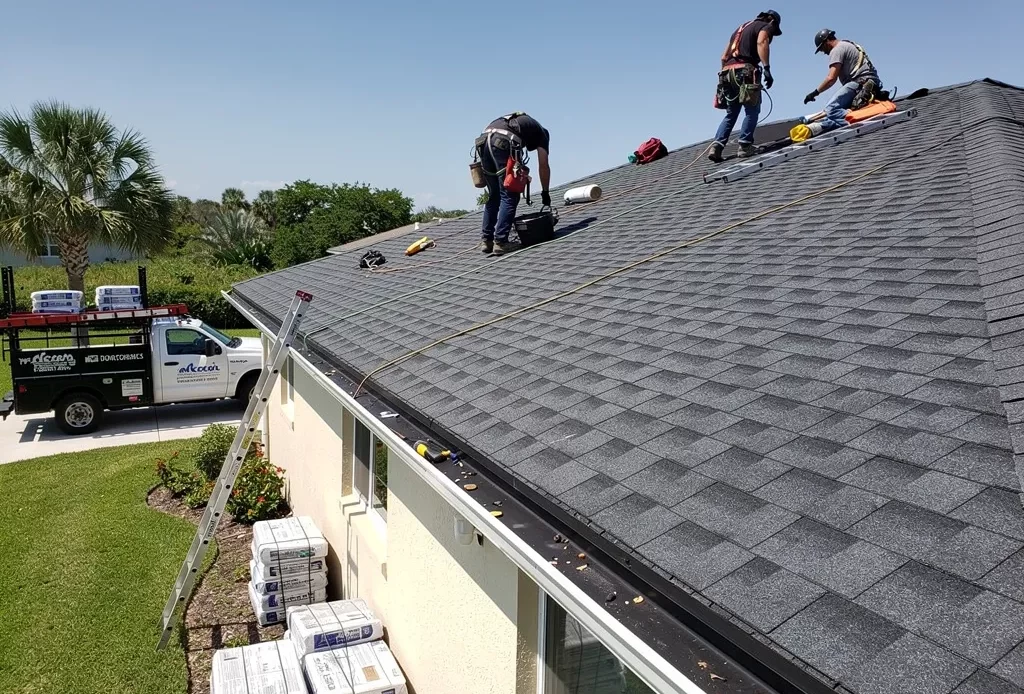
Roof pitch directly changes what a roofing project costs because steeper roofs demand more labor, more safety equipment, and more time. A walkable, low-pitch roof is faster and cheaper to work on than a steep one requiring specialized rigging.
The National Roofing Contractors Association confirms that roof pitch significantly impacts installation costs. A walkable pitch between 4/12 and 6/12 represents standard accessibility, and our crews move efficiently on those slopes without special rigging or extended setup.
Things change quickly as the angle increases. Pitches from 7/12 to 9/12 require additional safety equipment. At 10/12 and steeper, scaffolding and specialized gear become mandatory. That equipment cost appears on the estimate, and so does the slower pace of installation.
How Does OSHA Affect Steep Roof Pricing?
OSHA fall-protection requirements add measurable cost to steep roof projects because crews must use specific safety equipment and procedures as pitch increases. Compliance is not optional, so the associated labor hours show up as a distinct line item on the estimate.
The Occupational Safety and Health Administration mandates specific safety requirements for different roof pitches, and those requirements directly affect labor costs. Our team follows every regulation across every job in Pinellas County and greater Tampa Bay.
What Pitch Range Keeps Costs Lowest?
A roof pitch between 4/12 and 6/12 keeps installation costs lowest because it requires no specialized safety gear or rigging. Homeowners with steeper roofs should expect higher labor figures, explained clearly before work begins so pitch-related costs never come as a surprise.
Why Do Roofing Components and Repairs Add Up?
Roofing costs climb beyond the main material because a complete roof system includes underlayment, flashing, ventilation, and fasteners that each carry separate material and labor costs. Skipping any single component shortens the roof’s lifespan and triggers expensive failures later.
What factors affect the overall cost of roofing services for my property? The answer also includes the hidden assembly beneath the surface. Roof systems require components beyond the main material, and these differ depending on the selected roofing type. A metal roof demands specialized fasteners and trim. Tile roofs need reinforced decking and precise underlayment. Shingle systems rely on starter strips, ridge caps, and leak barriers. Each layer adds to the total invoice.
What Hidden Components Drive Up a Roofing Estimate?
Flashing, drip edges, and ventilation baffles rarely appear in a quick quote, yet these parts prevent water intrusion and attic moisture buildup. Leaving them out of a quote creates a lower number upfront and a higher repair bill later.
We see too many Pinellas County homes, from Clearwater to St. Petersburg, where failed flashing caused damage that spread into the ceiling and walls. Whether you need re-roofing, full replacements, repairs, or new construction, our team of professionals ensures your roof is built to last.
Why Does Replacing an Aging Roof Save Money Over Repeated Repairs?
Replacing an aging roof instead of patching it repeatedly saves money because repairs address symptoms, not the underlying deterioration. A roof past its service life leaks in new spots every season, and each service call adds to the lifetime cost.
We specialize in re-roofing, full replacements, repairs, and new construction, addressing all component needs in one project. Our team uses industry-leading materials for durability and performance, reducing the likelihood of premature component failure. One complete system replacement eliminates the cycle of emergency calls and water damage.
How Can I Budget for a Roof Replacement?
Budgeting for a roof replacement starts with understanding the full scope of costs, not just the material price. Material type, roof pitch, and accessibility all influence the final number, and so do disposal fees, permit costs, and unexpected decking repairs.
The biggest budgeting mistakes come from ignoring the smaller variables that quietly stack up during a roofing project. A realistic budget accounts for these line items before the first shingle is removed. Understanding roofing costs protects your home, avoids unnecessary expenses, and supports the right long-term choices. We see too many Pinellas homeowners caught off guard by charges they never anticipated, a surprise that disappears with a transparent estimate breaking down every component.
What Hidden Costs Should I Plan For?
Hidden costs typically include rotten decking replacement, upgraded underlayment, and code-required improvements that surface once the old roof comes off. Older homes across Pinellas County and Tampa Bay frequently need these upgrades, so we recommend setting aside 10 to 15 percent of the project budget for unforeseen repairs.
How Do Material Choices Affect My Budget?
Material selection drives the largest cost swing in any roofing project, with asphalt shingles on the affordable end and metal or tile systems costing more upfront for longer service life. Weighing that tradeoff against how long you plan to stay in the home clarifies the right choice.
Our shingle roofing installation services deliver durability without breaking the budget. Metal and tile systems cost more upfront but provide longer service life, and we help property owners weigh these trade-offs against their long-term goals.
KAM Roofing Services provides reliable service backed by a commitment to excellence. As an Owens Corning Designated Contractor, we offer extended warranties and best-in-class materials for peace of mind. Our team keeps communication transparent throughout every project in Clearwater, Largo, Dunedin, St. Petersburg, and the surrounding Tampa Bay area. Every estimate we provide reflects real-world conditions, not optimistic assumptions.
FAQ
Why do roofing costs vary so much?
Roofing costs shift because material type, labor rates, local regulations, and material price fluctuations stack together, making it easy to underestimate the total until the final invoice arrives.
How does roof material choice affect price?
Standing seam metal costs more than asphalt shingles, which remain an economical option. Metal and tile cost more upfront but offer longer-lasting performance and better storm resistance.
How can homeowners budget more accurately?
Understand material trade-offs before requesting estimates. Asphalt shingles deliver affordability, while metal and tile roofing cost more upfront but offer longevity, so weigh the choice against how long you plan to own the property.
What is a typical roofing estimate breakdown?
A typical roofing estimate breakdown itemizes material cost, labor, components like underlayment and flashing, permit fees, and disposal, so each line item is visible instead of one lump total.
What is the typical cost of roof replacement in Pinellas County?
Typical installed costs run roughly $350-$550 per roofing square for asphalt shingles, $750-$1,200 for standing seam metal, and $900-$1,400 for tile, with exact pricing set after an on-site inspection.
Contact KAM Roofing Services to to Get Your Free Estimate Today!
Understanding these cost factors puts you in control of your roofing investment. A transparent estimate that accounts for material, pitch, components, and hidden repairs eliminates surprises and protects your home. Budget realistically by weighing material trade-offs and setting aside a buffer for unforeseen decking or code upgrades. This knowledge turns a complex decision into a straightforward project with lasting results for property owners across Pinellas County and Tampa Bay.