
Key Takeaways
Managing hurricane wind uplift in Florida requires understanding how severe storms pull on your home. When strong storms strike the Sunshine State, high winds travel across your roof and act like an airplane wing. This movement over your roof creates a powerful vacuum. This negative pressure pulls the roof deck attachment upward instead of pushing it down.
If your roofing system cannot handle this wind uplift, the wood deck can tear away from the structure, causing your walls to lose their support and risking a total home collapse.
____________________________________________________________________________________________________
Why It Matters: How Weak Roofs Threaten Your Home
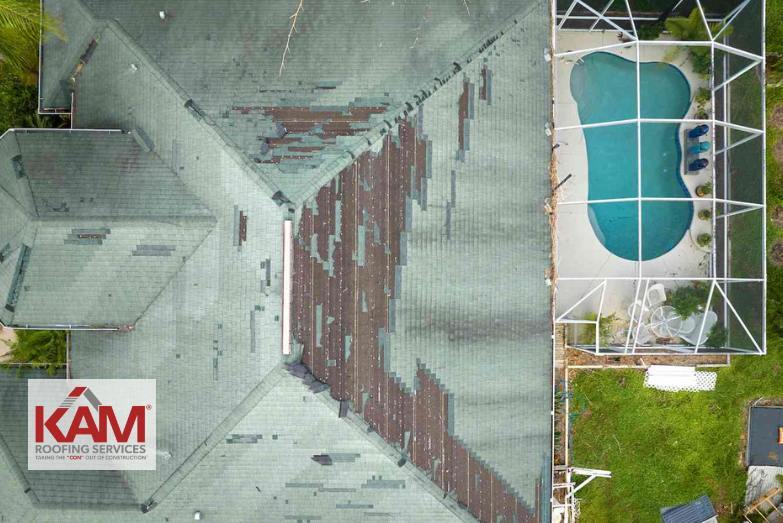
In Tampa Bay, we deal with intense coastal weather every single year. The thick Florida humidity and salty air slowly weaken older roof materials. When summer storms bring high winds, a weak roof acts as a damage amplifier for your whole property.
The wind force targets the corners and edges of your house. If the roof deck fails, heavy wind-driven rain pours inside. This water ruins your ceilings, walls, and furniture. Even worse, losing a section of your roof breaks the internal pressure barriers of Florida homes.
When wind gets inside a sealed house, it pushes outward on the walls and upward on the remaining ceiling. This internal pressure can easily blow out your windows or your garage doors.
Your roof is the primary shield for your entire family. At KAM Roofing Services, we see these structural weak spots all the time. We are a local contractor specializing in Metal, Shingle, Tile, and Flat roofing.
We know exactly what it takes to build a secure home and our team focuses on transparent, reliable operations so you always know your property is ready for storm season.
4 Common Roof Vulnerabilities
- Flashing and Roof Edges: Metal flashing is a primary failure point. If high winds catch a loose edge, they tear the metal away. This breaks your waterproof seal and lets the wind rip into the underlayment.
- Roof Shape: Traditional gable roofs have two flat, vertical sides that catch wind like a giant sail. This shape faces high uplift forces. A hip roof has four sloping sides, which offers much better wind resistance because air flows smoothly over it.
- Roof Deck Attachment: The wood sheets under your shingles must stay anchored to your trusses. If the plywood sheathing is not nailed down with the proper spacing, the entire deck can detach during a hurricane.
- Weak Roof-to-Wall Connections: Your roof must stay tied to the rest of your house. Without strong metal connectors anchoring the frame to the walls, the whole top structure can lift off.
Meeting the Florida Building Code
The Florida building code has strict rules to prevent wind damage in a high-hurricane zone. In places like Miami-Dade and Broward counties, the rules are the toughest in the country. But even here in the Tampa Bay area, the building code requires advanced patterns for attaching your roof.
Contractors must use specific ring shank nails spaced tightly together along the edges of your roof deck. These nails have deep ridges that grip the wood like a screw, offering double the holding power of regular smooth nails.
If you have solar panels on your roof, they can change how wind flows across the surface. A good contractor makes sure the solar mounts are anchored properly so they do not lower your wind resistance. The goal is to build a continuous load path. This engineering method ties your roof, walls, and foundation together using metal connectors so the house acts as one solid unit against the storm.
Structural Upgrades: Standard Minimums vs. Advanced Protection
| Upgrade Feature | Standard Building Code Minimum | Advanced Safety Upgrade |
| Roof-to-Wall Attachments | Standard hurricane straps or basic clips with 2 nails. | Heavy-duty thick wraps with full nailing to anchor the roof frame. |
| Roof Deck Attachment | Basic nails with standard 6-inch spacing on edges. | Upgraded ring shank nails with tight 3-inch perimeter spacing. |
| Underlayment Protection | Standard felt paper that tears easily when exposed. | Self-adhering peel-and-stick secondary water barrier. |
Practical Steps to Protect Your Home
Here are four actionable tips Florida homeowners can use right now to stay safe:
- Check your roof-to-wall attachments, Tampa residents: If your home was built before 2002, your roof might only use thin toenails instead of modern hurricane straps. Upgrading these connections can lower your insurance bills and keep your roof attached.
- Install a secondary water barrier: This is a sticky layer applied right to the wood deck. If your shingles blow off, this barrier keeps the rain out. It prevents massive indoor water damage.
- Keep your flashing secure: Have a professional check the metal edges of your roof before every storm season. Tight flashing stops the wind from getting a foothold under your roof.
- Schedule a professional inspection: Do not wait for a major storm to find a weak spot. A local roofer can look in your attic to verify your roof deck and wall connections.
FAQs
How much does a secondary water barrier cost in Tampa Bay?
A secondary water barrier cost typically ranges from $1,500 to $3,000 for an average-sized home when installed during a full roof replacement. This expense depends on the size of your roof and the specific type of self-adhering material used.
While it adds to the upfront price, it saves money over time by triggering major insurance discounts and protecting against leaks during summer storms.
What are ring shank nails, and why are they used?
Ring shank nails are specialized roofing nails featuring deep ridges along the shaft that provide extra grip into the wood deck. They are required by the building code because their unique design resists being pulled out by extreme wind force.
These nails offer double the holding power of regular smooth nails, keeping your roof deck secure during a storm.
What is a continuous load path for a home?
A continuous load path is an engineering method that ties your roof, walls, and foundation together using metal connectors like hurricane straps.
This connection makes sure that when high winds pull up on your roof, the lifting force is transferred all the way down to your concrete foundation. This system keeps the entire house from breaking apart under storm pressure.
Do solar panels increase the risk of wind damage on a roof?
Solar panels do not automatically increase wind risk if they are installed with proper wind-rated mounting hardware. However, if they are placed too close to the edges of your roof, they can catch the wind and worsen wind uplift.
A proper inspection makes sure your panels are placed safely according to local wind requirements.
Request An Estimate Today
True safety starts at the top. Call a trusted neighbor who focuses on reliable operations. Contact us today to check your roof attachments before the next tropical system hits. At KAM Roofing Services, we believe in giving you straight answers about your roof materials and structural safety.
We are dedicated to “Taking the ‘Con’ out of Construction.”
Let us help you protect your home today.
1 reply on “High Winds and Weak Roofs: Structural Vulnerabilities That Risk Your Family’s Safety”
[…] to your roof during a hurricane. Trim back any branches that could break off and cause damage in high winds. Regular tree maintenance not only protects your roof but also reduces the risk of debris clogging […]