
Replacing a metal roof is rarely about panel age alone. In most cases, the real trigger is widespread failure in corrosion control, fasteners, flashing, or sealants that makes repeated repairs less reliable and less cost-effective.
Key Takeaways
- Replace a metal roof when structural rust, widespread corrosion, panel perforation, or repeated failures across fasteners, seams, and flashing affect large areas; repair is usually enough when problems are limited to isolated screws, washers, sealant, or one detail.
- Metal roof lifespan varies widely by material and system type: KAM Roofing Services frames Galvalume steel at about 30 to 45 years, aluminum at 50+ years, and copper or zinc at 80+ years in Tampa Bay conditions.
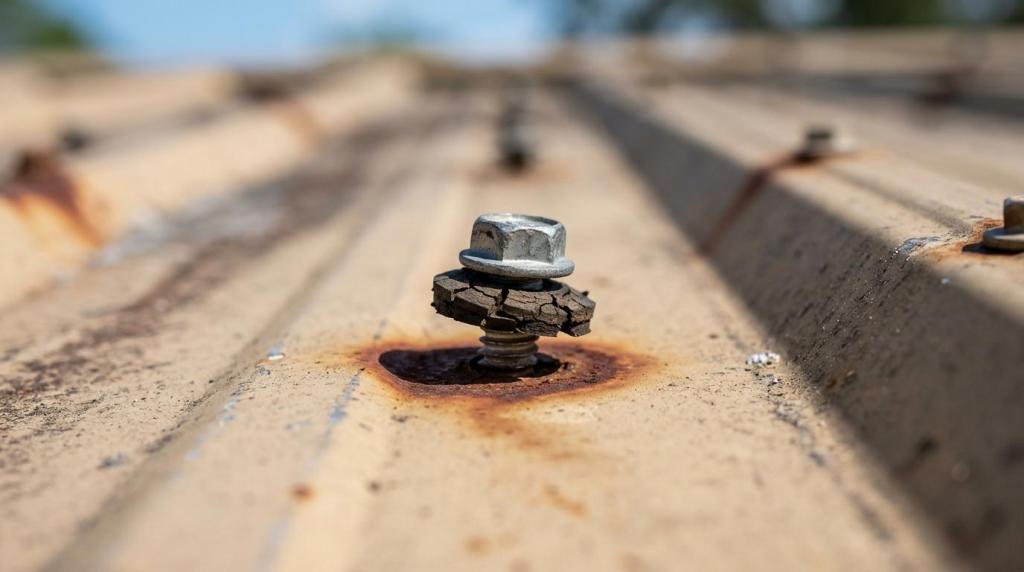
- Many metal roof leaks come from backed-out screws and failed rubber washers, not failed panels; screw-down roofs often need fastener work every 7 to 10 years, and sealants often need attention around 10 to 15 years.
- The Metal Construction Association says a similar low-slope roof built today with best practices can exceed 60 years, but fasteners may still need replacement before the panels reach end of service life.
- If hidden fasteners, crumbling edges, or rust-through are present, replacement is usually safer than another patch, especially after recurring leaks or storm exposure.
That is why a smart repair-versus-replace decision starts with failure mode, roof type, and the durability of the assembly components that are compromised. In Florida, sun, salt air, heavy rain, wind, mold, and mildew often age components at different speeds, so the right answer depends on more than a calendar.
When does a metal roof need replacement instead of repair?
Replace a metal roof when rusting, corrosion, structural rust, or repeated failures are widespread across the system. Metal Construction Association guidance and KAM Roofing Services both point to component failure patterns, not just age, as the key signal.
Side-by-side comparison of metal roof issues suited for repair versus signs that indicate full replacement.
A repair usually makes sense when the problem is localized. If the leak comes from a few backed-out screws, a failed pipe boot, or one short run of separated flashing, a targeted repair can add meaningful life. If the same issues keep returning across multiple elevations, penetrations, or panel runs, the roof may be past efficient maintenance.
“KAM Roofing Services notes that many Tampa Bay metal roof leaks come from backed-out screws or failed rubber washers, not from the metal panels themselves.”
The trade-off is simple. If isolated work can restore watertight performance without chasing new failures every season, repair is the better value, particularly since it can help avoid unexpected energy bills. If new leaks keep appearing because the attachment points, cut edges, and details are aging together, replacement usually becomes the safer long-term call, particularly from an energy efficiency standpoint.
A common misconception is that any leak means the whole roof is done. On metal roofs, that is often false. One failed component does not equal total roof failure, but repeated component failure over a wide area often does.
How long does a metal roof usually last?
Metal roof lifespan varies widely by material and system type. KAM Roofing Services frames Galvalume steel at 30 to 45 years, aluminum at 50+ years, and copper or zinc at 80+ years in Tampa Bay conditions.
Those ranges are useful, but they are not guarantees. Coating quality, panel profile, slope, maintenance history, insulation, marine exposure, and installation details all affect service life expectancy. A screw-down agricultural panel near salt air does not age the same way as a properly detailed standing-seam system inland.
The Metal Construction Association adds an important benchmark. Its guidance on similar low-slope unpainted 55% Al-Zn coated steel standing-seam systems says a roof built today using best practices can achieve more than 60 years of service life. That does not mean every component lasts 60 years. Fasteners, sealants, and flashing often need work first.
Pro tip: treat lifespan charts as planning ranges, not replacement dates. If a 12-year-old roof shows fastener fatigue but sound panels, repair may be the right move. If a 25-year-old roof has widespread rust-through, the calendar matters less than the failure pattern.
What are the best ways to get a trustworthy metal roof replacement opinion?
The most reliable opinion comes from someone who can assess panels, fasteners, flashing, and substrate together. KAM Roofing Services, known for their expertise in home improvement, manufacturer-recognized contractors, consultants, and engineers each fit different decision types.
A strong inspection should produce photos, marked problem areas, and a clear repair-versus-replace rationale. Ask what failed, how widespread it is, and whether the proposed fix addresses the cause or only the symptom.
- KAM Roofing Services: A licensed and insured Tampa Bay contractor that handles metal roofing, repairs, maintenance, and replacement, considering cost, and useful when local climate, storm exposure, or coordination items like solar removal and reinstall are part of the decision.
- Manufacturer-recognized metal roofing contractor: Best when panel profile, clip system, finish compatibility, or warranty status affects the repair plan.
- Independent roof consultant: Helpful for HOAs, COAs, and commercial owners who want third-party documentation, budget staging, and bid review.
- Structural engineer: Necessary if there are signs of deck movement, deflection, corrosion at supports, or questions about load path and attachment.
If two opinions disagree, compare the scope, not just the price. The better report usually explains whether the trouble is isolated at components or systemic across the assembly.
How can you tell if rust is cosmetic or structural?
Cosmetic oxidation is not the same as structural rust. Structural rust means section loss, perforation, flaking edges, weak attachment areas, or corrosion that has reduced the metal’s strength.
Start with location and depth. Light surface discoloration on a scratched finish may only need cleaning, treatment, and recoating. Pitting, rust-through, rusting, soft edges, or metal that crumbles near laps, eaves, and fastener points to a deeper failure.
If the rust is limited to a small exposed cut edge, repair may work, potentially saving on energy costs and maintaining the roof’s integrity. If rust is widespread at panel ends, under laps, around screws, or near wall transitions, replacement becomes more likely because water has probably been cycling through the assembly for a while, compromising both the roof’s integrity and energy efficiency.
“KAM Roofing Services says structural rust that has eaten through the metal or caused crumbling edges is where replacement is usually safer than repair.”
A frequent mistake is judging rust from the ground. Brown staining may look severe but be localized, while hidden rust at fasteners or under trim can be far more serious. Close inspection matters more than curb appeal.
How do fasteners and rubber washers change the repair-versus-replace decision?
Fasteners often decide the timeline before panels do. KAM Roofing Services says screw-down roofs commonly need screw retightening or replacement every 7 to 10 years, and washers and sealants often need attention after 10 to 15 years.
Highlighted quote stating that many metal roof leaks come from fasteners and failed washers rather than the panels themselves.
Step 1 is to map the leak pattern. If leaks cluster around exposed screws, laps, or ridge details, the first suspect is often backed-out fasteners or dried-out rubber washers rather than failed metal panels.
Step 2 is to check how widespread the failure is. A handful of loose screws can be serviced. Hundreds of loose, overdriven, missing, or corroded fasteners across many slopes tell a different story. At that point, the issue is not one bad spot. It is the fastening system reaching fatigue together.
“KAM Roofing Services frames screw-down metal roof maintenance around 7 to 10 years because fastener washers dry rot in Florida sun.”
Step 3 is to decide whether the repair will hold. If the screw holes are elongated, the metal around the fastener is distorted, or replacement screws would only be a temporary grip fix, reroofing is usually the cleaner answer.
Pro tip: a larger screw is not always a proper repair. If the panel hole is wallowed out or the substrate no longer holds securement, upsizing the fastener may only buy a short window.
Is one leak enough to replace a metal roof?
Usually not. A single leak on a metal roof in Clearwater or St. Petersburg is more often a flashing, fastener, or penetration issue than proof that the entire roof system has failed.
Compare the leak to the roof’s overall condition. If the roof is otherwise dry, attachments are sound, durability is intact, and corrosion is limited, repair is usually the right move. If the leak is one of many, shows up in different weather events, or returns after recent repairs, the system may be telling you something larger.
This is where if-then logic helps. If the leak source is isolated and accessible, repair. If the leak is tied to broad movement, repeated seam opening, rust at multiple penetrations, or hidden moisture in the deck, replacement deserves serious consideration.
A common misconception is that the interior stain marks the exact entry point. On metal roofs, water often travels along purlins, underlayment, or panel laps before it shows inside. The diagnostic path matters as much as the patch.
How should you inspect flashing, seams, and penetrations on an aging metal roof?
Start at the details, not the field panels. Pipe boots, skylights, valleys, ridge transitions, wall flashing, and equipment curbs often fail sooner than the metal sheets themselves.
Step 1 is to inspect every penetration and transition. Look for cracked boots, open counterflashing, loose closures, lifted trim, mildew, mold, and sealant that has hardened, split, or detached.
Step 2 is to evaluate movement. Metal expands and contracts, so details at walls, curbs, and long runs can fatigue over time, especially if insulation is not properly considered. If a repair blocks normal thermal movement, it may fail even if it looks neat on day one.
Step 3 is to judge whether the detail failures are isolated or repetitive. A few worn boots or one failed valley detail can be repaired. If many details are aging at once, replacement may be more practical because the labor to chase each weak point adds up quickly.
Pro tip: more caulk is rarely the right answer. If the wrong sealant is used, or if it bridges a moving joint without the correct detail, the leak often returns.
How do screw-down and standing-seam metal roofs differ on replacement timing?
Screw-down and standing-seam systems do not age the same way. KAM Roofing Services notes that standing-seam systems use hidden fasteners and generally last longer with very little maintenance, while exposed-fastener roofs need recurring screw and washer attention.
Screw-down roofs are more exposed to routine component wear because each fastener penetrates the panel surface. That makes them easier to inspect, but it also creates many more potential leak points over time. Standing-seam roofs reduce those exposed penetrations, which often improves long-term performance.
The trade-off is visibility. With hidden-fastener systems, some attachment issues are harder to see. The National Institute of Standards and Technology has noted that corrosion in hidden fasteners can be difficult to assess because installed fasteners are not accessible without opening the roof.
If you are comparing replacement timing, think this way: screw-down systems often announce trouble earlier through visible fastener and washer wear. Standing-seam systems may last longer, but when hidden attachment issues develop on an older roof, the evaluation can be more involved.
What inspection process works best when the roof is 10 to 15 years old or storm-exposed?
Use a documented inspection process. Metal Construction Association guidance supports regular inspections and periodic cleaning, and the 10 to 15 year range is a smart checkpoint for many Florida roofs with exposed fasteners and sealants.
Step 1 is to review history. Note storm dates, prior repairs, leak locations, roof age, and whether the roof is screw-down or standing seam. Repair history often reveals whether failures are isolated or repeating in a pattern.
Step 2 is the field inspection. Check fasteners, panel laps, flashing, boots, edges, gutters, finish wear, corrosion, and signs of movement. On commercial or low-slope assemblies, moisture mapping or selective openings may be justified if recurring leaks suggest hidden problems.
Step 3 is the decision matrix. If issues are limited and repairable, create a maintenance plan with timing and budget. If many components are aging together, if repair density is high, or if storm damage has reduced securement across wide areas, replacement, despite the cost, is usually the cleaner choice.
Pro tip: compare photos from year to year. Small changes in oxidation, panel distortion, and fastener position can reveal acceleration that a single inspection misses.
How do hidden fasteners and older low-slope metal roofs complicate replacement decisions?
Hidden fasteners can conceal serious deterioration. NIST says routine maintenance inspections do not reveal the condition of hidden fasteners, and corrosion can reduce securement without obvious exterior clues.
That matters most on older low-slope metal roofs, where leaks may appear minor while the real issue sits at clips, concealed attachments, or under details. The Metal Construction Association also notes that fasteners and insulation may require replacement before the roof reaches the end of its overall service life, and that corrosion can vary by site.
If a low-slope or standing-seam roof has recurring leaks but the panels still look decent, do not assume the roof is healthy. The attachment system, substrate, or concealed details may be the limiting factor. In those cases, selective exploratory work can be the difference between a sound repair plan and a patch cycle that never really stops.
A final misconception worth avoiding is this: a clean-looking metal roof is not always a healthy metal roof, as mold and mildew can often go unnoticed. When concealed corrosion, loss of securement, or repeated detail failure enters the picture, replacement timing should be based on system integrity, not appearance alone.
Frequently Asked Questions About When to Replace a Metal Roof
How long does a metal roof typically last?
A well-installed metal roof can last anywhere from 40 to 70 years, depending on the material, installation quality, energy efficiency, durability, and maintenance.
What are the signs that my metal roof needs to be replaced?
Common signs include widespread rusting or corrosion, persistent leaks, loose or missing fasteners, warping or buckling panels, and visible structural damage.
Can I repair my metal roof instead of replacing it?
Minor issues like small leaks or isolated rust spots can often be repaired. However, if the damage is extensive or the roof is nearing the end of its lifespan, replacement is usually the better long-term solution.
Does replacing a metal roof increase my home’s value?
Yes, a new metal roof can enhance your home’s curb appeal, energy efficiency, and even help reduce energy bills, making it a smart investment.
How do I choose the right contractor for metal roof replacement?
Look for a licensed, insured, and experienced roofing contractor with positive reviews and a strong portfolio of completed metal roofing projects. Ready to Replace Your Metal Roof? Trust KAM Roofing Services for Expert Solutions.
Ready to Replace Your Metal Roof? Trust KAM Roofing Services for Expert Solutions
If you’re noticing signs that it’s time to replace your metal roof, don’t wait until minor issues become major headaches. KAM Roofing Services specializes in metal roof replacement, offering expert guidance, premium materials, and flawless installation to protect your home for decades to come.
Contact KAM Roofing Services today for a free inspection and personalized quote. Take the first step toward a safer, more beautiful home with a roof you can trust.