
A Guide for Pinellas County Homeowners
Finding the sweet spot for your roof edge can feel like a balancing act. If you have ever watched a summer storm roll across the Gulf, you know that the rain in Pinellas County doesn’t just fall down. It blows sideways.
This creates a real challenge for homeowners: you need enough of an overhang to keep water away from your house, but not so much that a hurricane can grab hold of the metal and lift it like a sail.
Getting the overhang right is about more than just looks. It is a technical requirement that protects your wood structure and keeps your attic dry.
At KAM Roofing Services, we see the results of poor overhang installation every year. Whether it is rotted wood or panels that “chatter” in the wind, these issues usually start at the very edge of the roof.
The Standard: Recommended Overhang Length
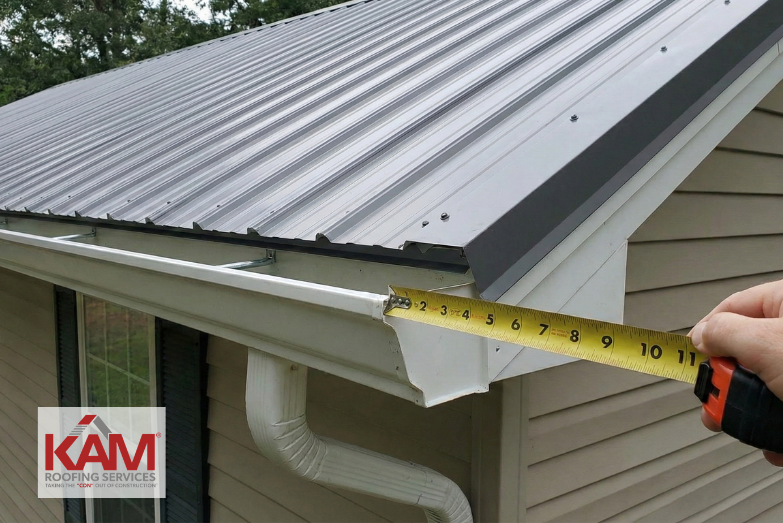
For most residential projects, the industry standard for a metal roof overhang is between 1 and 1.5 inches.
This distance is measured from the drip edge or the fascia board.
Why this specific range? Metal roofing panels behave differently from asphalt shingles. Shingles are flexible and can droop if they extend too far.
Metal is rigid, but it relies on surface tension. If the overhang is too short, water will “wick” back under the panel and soak your fascia.
If it is too long, the metal loses its structural support and becomes a major target for wind.
While national guides might suggest longer extensions to help prevent ice dams, those rules don’t apply to us in Florida. In our climate, we focus on two things: water shedding and wind resistance.
Why Proper Overhang Matters in Pinellas County
In places like St. Petersburg and Clearwater, our homes take a beating from the elements. A proper overhang is your first line of defense.
Preventing Water Damage
The main job of the overhang is to direct heavy rain into your gutters. When you have the proper overhang, water clears the roof edge and drops straight into the center of the gutter.
Without this extension, water can trickle down the face of your fascia board. Over time, this constant moisture leads to wood rot, mold, and peeling paint.
Battling Wind-Driven Rain
During a tropical storm, the wind can push rain upward and under your roofing panels. A 1.5-inch overhang creates a natural break that stops this “capillary action.”
It ensures that even when the wind is howling, the water has a clear path away from the vulnerable wooden deck of your home.
Weather Protection
Your roof edge is a high-wear area. The intense Florida sun can bake the wood behind your metal panels.
A small, consistent overhang provides a bit of shade and protection for the drip edge and fascia, ensuring the “invisible” parts of your roof last just as long as the metal itself.
The Sail Effect: Understanding Wind Uplift Risk
This is the part where local expertise really matters. Pinellas County is a high wind zone. When you install metal roofing, you have to consider the uplift risk.
Think of a long overhang like a handle. The further the metal extends past the solid wood of your roof, the more leverage the wind has to pull it up. In a major storm, a 3-inch overhang can act like a sail, catching the wind and pulling the fasteners right out of the wood.
To reduce the risk of your roof lifting during a hurricane, we keep the overhang tight. This ensures the wind blows over the roof rather than under the panels. By following the 1 to 1.5 inch rule, you get the water protection you need without turning your roof into a liability.
Installation Essentials: Drip Edges and Fascia
Installing a metal roof overhang is not just about where the metal ends. It is about how the whole edge is built.
- The Drip Edge: Every high-quality metal roof needs a sturdy drip edge. This metal flashing is installed under the roofing panels to provide a solid surface for the overhang. It supports the metal and ensures that water cannot curl back into the soffit.
- Fascia Board Protection: We make sure the overhang installation accounts for the thickness of your fascia. The goal is to have the metal extend just far enough that even in a light drizzle, the wood stays dry.
- Fastener Placement: Near the roof edge, we use a tighter screw pattern. This anchors the panels firmly, preventing the “vibration” or “chatter” that can happen when wind catches the edge of a metal sheet.
Factors That Change the Overhang Distance
While the 1-inch rule is a great baseline, we sometimes adjust the recommended overhang length based on your specific home.
- Roof Pitch: If you have a very steep roof, water moves with a lot of speed. We might lean toward a 1 inch overhang to ensure the water doesn’t “overshoot” the gutters. On a low-slope roof, a 1.5 inch overhang helps ensure the water clears the edge properly.
- Gutter Width: If you have oversized 6-inch or 7-inch gutters, we align the panels so the water lands right in the middle.
- Panel Profile: A standing seam roof has different drainage needs than a 5-v crimp or corrugated panel. The ribs in the metal change how water flows, and the overhang must be adjusted to match.
Why Hire a Professional to Install Metal Roofing?
It might seem like a small detail, but the overhang is often where DIY projects and “budget” roofers fail. Installing a metal roof overhang requires precision. If the panels are cut unevenly, your roofline will look jagged and unprofessional. More importantly, an improper overhang can actually void your manufacturer’s warranty.
Local building codes in Pinellas County are some of the toughest in the country. Our team knows these codes inside and out. We ensure that every panel is measured, cut, and fastened to handle the specific wind loads of the Tampa Bay area.
FAQs
Can a metal roof overhang be 3 inches?
In some parts of the country, yes. But in a high wind area like Pinellas County, 3 inches is dangerous. It creates too much leverage for the wind and significantly increases your uplift risk.
Do I need a drip edge if I have a 1-inch overhang?
The drip edge is essential. It provides structural support for the metal panels and ensures that water is physically moved away from the wood.
How far should metal roofing overhang gutters?
Ideally, the metal should extend about 1/3 of the way into the gutter. This ensures that even during a torrential downpour, the water stays inside the gutter system and away from your foundation.
What happens if the overhang is too short?
If the metal is flush with the fascia, water will run down the wood. This causes rot and can lead to leaks that enter your home behind the siding or through the soffit.
Get a Precision-Built Metal Roof Today
Your roof is the only thing standing between your family and the next big storm. Don’t leave the details to guesswork. Whether you are curious about overhangs or ready for a full system upgrade, you need a team that understands the local climate.
At KAM Roofing Services, we pride ourselves on high-quality craftsmanship and honest advice. We know Pinellas County because we live here, too. Let us help you protect your home with a metal roof that is built to last.
Contact KAM Roofing Services today for a professional consultation and a detailed estimate. We will make sure your roof is ready for whatever the Florida weather throws your way.