
What Clearwater Homeowners Need to Know About HOAs and Metal Roofs
You are stuck in a difficult position. On one side, your insurance carrier is demanding a new roof or raising your premiums to unmanageable levels. On the other side, your Homeowners Association (HOA) board uses a rulebook from 1995 that only lists “asphalt shingles” or “tile” as approved options.
You want a metal roof for the safety and the savings. But you feel terrified about signing a contract only to receive a rejection letter from the architectural committee.
The Short Answer: Yes, a Tampa Bay HOA can deny a metal roof if it conflicts with the aesthetic standards in the community’s Covenants, Conditions, and Restrictions (CC&Rs). However, they cannot easily deny energy-efficient improvements without a valid reason.
With the current insurance crisis, many boards in Clearwater and Tampa are approving metal roofs if you choose the right style, specifically stone-coated steel or metal shingles that mimic traditional materials.
Understanding Your HOA’s Power: CC&Rs vs. Florida Law
HOAs govern communities through CC&Rs to ensure every home looks uniform. While they have the legal right to dictate the “external harmony” of the neighborhood, Florida Statute 163.04 limits their ability to ban energy-efficient improvements.
This creates a negotiation opportunity if you present your metal roof as an energy-saving upgrade.
The Aesthetic Loophole
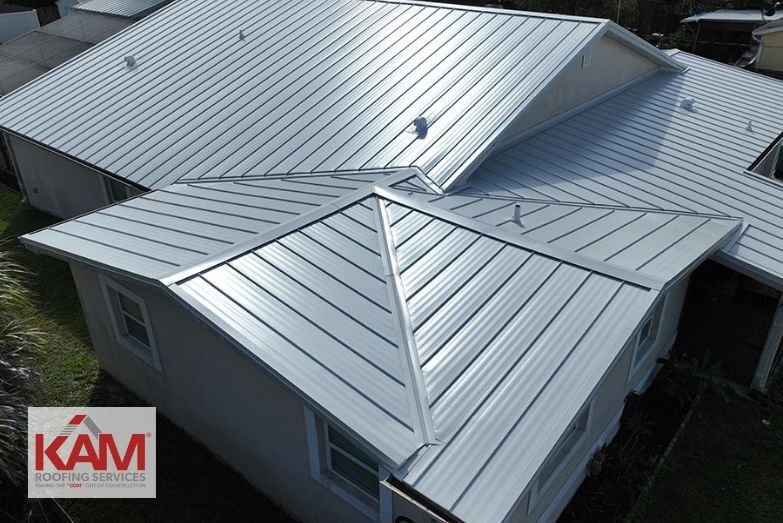
Most HOA denials are not about the material itself. They are about the look. The board members are often worried that a “standing seam” metal roof (the kind with long vertical lines) will make a residential home look like a barn or a commercial warehouse.
If your deed restrictions say “Standard Shingles Only,” the board has the authority to enforce that to maintain the neighborhood’s visual character. This is common in established communities like Feather Sound or Lansbrook.
The Legal Nudge
Florida Statute 163.04 expressly forbids ordinances or deed restrictions that prohibit the installation of “solar collectors, clotheslines, or other energy devices based on renewable resources.”
While a metal roof is not a solar panel, it is often an Energy Star-rated product with high reflectivity (cool roof technology). We have seen homeowners successfully argue that a high-efficiency metal roof falls under the spirit of this protection, especially if it significantly lowers energy consumption. It is not a guaranteed win, but it is a strong starting point for a conversation.
Review Your Documents First
Before you call a roofer, find your official bylaws. Look for a section titled “Architectural Standards” or “Approved Roofing Materials.” If it explicitly bans metal, do not panic. Someone may have written the rules twenty years ago, and they can make amendments.
The “Trojan Horse” Solution: Stone-Coated Steel & Metal Shingles
If your HOA bans standard metal panels because they look “too industrial,” stone-coated steel is the solution.
These systems provide the Class 4 Impact Rating and a 50-year lifespan of metal, but designers create them to look identical to architectural shingles or barrel tile from the street.
Visual Mimicry
This is the “counter-intuitive” tip that most homeowners miss. You do not have to choose between HOA approval and metal roofing performance.
Stone-coated steel roofing consists of steel panels stamped into the shape of shingles or tiles, then coated with actual stone granules. From the sidewalk, it passes the “drive-by test.” It looks exactly like the roofs on your neighbors’ homes.
The Best of Both Worlds
We frequently install these systems in strict communities like East Lake Woodlands and Countryside. The HOA gets what they want: a traditional aesthetic that fits the community theme. You get what you want:
- Wind Mitigation Discounts: Huge savings on insurance premiums.
- Longevity: A roof that lasts 50+ years instead of 15.
- Durability: Resistance to cracking, warping, and curling.
Navigating the ARC (Architectural Review Committee) Process
Summary: Approval is rarely automatic. You must submit a formal application to the Architectural Review Committee (ARC). Your success depends on submitting a professional packet that includes material samples, color swatches, and engineering data to prove the new roof protects property values.
Step-by-Step Guide
Do not just send an email asking, “Can I have a metal roof?” You need to build a case.
- Get the Form: Download the ARC Modification Request form from your community portal.
- Get the Sample Board: We provide our clients with physical samples of the metal roofing material. The board needs to be touched and seen in person.
- Submit the “Value” Letter by including a brief letter that explains this roof is rated for high winds (150+ mph).
The “Insurance” Argument
HOAs care about one thing above all else: Property Values.
In 2026, uninsurable homes are a liability to the entire neighborhood. If buyers cannot get insurance on a home because of an old or weak roof, the home value drops. Frame your request this way: “This metal roof guarantees my home remains insurable and attractive to future buyers, which supports the property values of the entire community.”
Why Tampa Bay HOAs Are Changing Their Tune
The Florida insurance market is forcing strict HOAs to modernize their rules.
With asphalt shingles often failing to qualify for coverage after just 15 years, Boards are becoming more lenient on metal roofs to ensure the community remains resilient against hurricanes and free of blue tarps.
Longevity vs. Eyesores
Nothing hurts a neighborhood’s look more than blue tarps flapping in the wind six months after a storm. Asphalt shingles tear off easily in high winds. Metal roofs generally do not.
Smart HOA boards realize that allowing metal roofs means fewer repairs, fewer construction trucks on the roads over time, and fewer tarped homes after hurricane season.
Modern Aesthetics
Ten years ago, metal roofing was limited to rural areas. Today, it is a premium product. In high-end areas like Westchase, metal accents and full metal roofs are now seen as luxury upgrades rather than commercial eyesores.
Why Choose KAM Roofing Services?
You need a partner who knows how to handle the paperwork, not just the hammer.
At KAM Roofing Services, we have guided hundreds of homeowners through the ARC approval process.
- We Handle the Paperwork: We help prepare your application packet with the technical specs your HOA requires.
- Local Experience: We know which communities in Clearwater and Tampa allow standing seam and which ones require stone-coated steel.
- Variety: We offer a wide range of HOA-friendly profiles that satisfy even the strictest committees.
Don’t let an HOA rulebook stop you from protecting your home. Let us help you find the right roof that satisfies the board and saves you money.
FAQs
Can an HOA legally ban metal roofs in Florida?
Technically, yes. HOAs can restrict roofing materials to maintain community aesthetics. However, they cannot easily ban energy-efficient upgrades without cause, and many are updating rules to accommodate insurance requirements.
What is the best metal roof for strict HOAs?
Stone-coated steel or metal shingles are the best options. They mimic the look of traditional asphalt or tile roofs, satisfying aesthetic rules while providing the durability of metal.
Do I need HOA approval for a roof replacement if I use the same material?
Usually, yes. Most CC&Rs require ARC approval for any exterior modification, even if you are replacing “like for like,” to ensure the color and quality match current standards.
Can my HOA force me to replace my roof?
If your roof is in disrepair, leaking, or visibly dirty (mildew/algae), the HOA can fine you or demand a replacement to maintain community standards.
Does a metal roof add value to my home in an HOA community?
A metal roof increases resale value and makes the home more attractive to buyers who are worried about securing affordable homeowners’ insurance in Florida.
Contact KAM Roofing Services for Metal Roofing Installation
Navigating HOA guidelines can feel like a second job, but you don’t have to do it alone. At KAM Roofing Services, we act as your partner in the process. From providing the exact material samples your ARC needs to explaining the wind-rating benefits to your board, we help you fight for the roof your home deserves.